By MINT-SmartLab Graz · Published on 18 November 2026
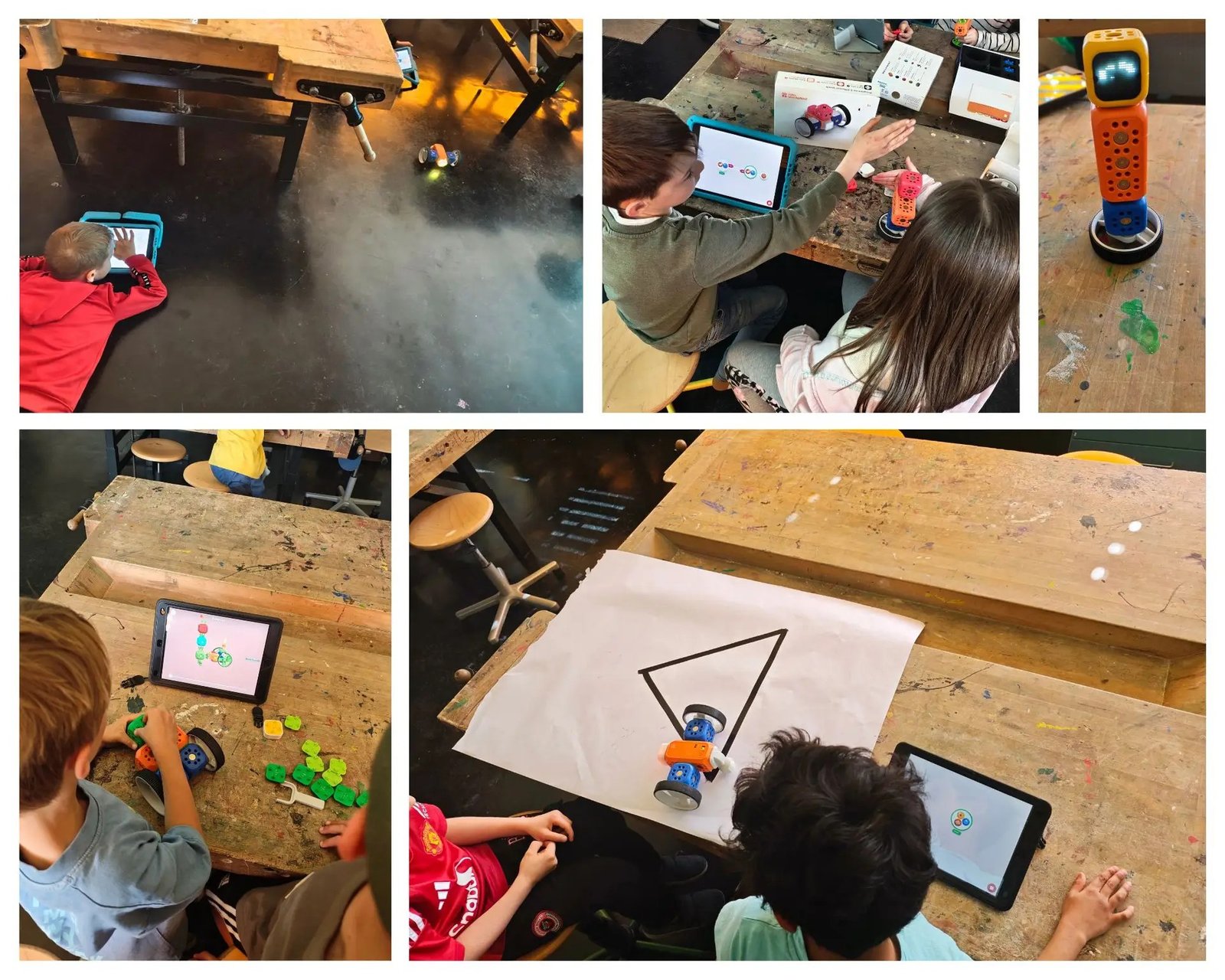
Programming sounds like screens, jargon and long lines of code. In primary school it looks completely different: children put picture blocks together, steer small robots and learn how to solve a problem step by step. In this article we explain what the curriculum says, what is realistic in each school year and how schools can get started.
What the curriculum says
In Austria’s new primary school curriculum from 2023, computer science education (“Informatische Bildung”) is a cross-curricular topic. This means it is not a separate subject, but it must be covered in lessons. In general studies (Sachunterricht), the technology area explicitly names digitalisation, problem solving and robotics.
- Year 3: children should “program simple instructions”.
- Year 4: children should apply the automated processing, storage and transmission of information.
A separate compulsory subject only comes later: Digitale Grundbildung (basic digital education) is taught at lower secondary level (Mittelschule and AHS). Primary school lays the foundation for it.
What is realistic in each school year
Children learn programming differently at every age. From our work at primary schools in Graz, this order has proven itself:
| Year | Age | What works well |
|---|---|---|
| 1 | 6–7 | Steering a robot with picture blocks. No reading needed yet. The children learn that the order of the steps matters. |
| 2 | 7–8 | Loops and repetition, first sensors, their own small games and stories on the iPad. |
| 3 | 8–9 | A mini computer like the micro:bit: input, processing, output, if-then rules and simple counters. |
| 4 | 9–10 | Planning their own projects, connecting simple electronics and a first look at “real” program code. |
Read more about age in our guide From what age can children code? What this looks like as a continuous learning path is shown in our STEM curriculum for after-school care.
Start without a screen
Programming starts in the head, not on the device. These exercises work in any class, without any technology:
- Play robot: one child is the “robot”, another gives exact commands such as “2 steps forward, turn right”. Unclear commands quickly lead to funny mistakes.
- Directions on squared paper: the children draw a path to a goal with arrows. Who finds the shortest way?
- A recipe as a program: describe making a sandwich in steps. What happens if a step is missing?
This way children understand the basic idea: a computer does exactly what you tell it, no more and no less.
What children learn, and what they don’t
- Structured thinking: breaking a big task into small steps.
- Finding and fixing mistakes: a mistake is not a failure but the next clue.
- Working together: two children on one robot means agreeing and explaining.
It is also important to stay honest: there is no evidence that programming automatically improves school grades. We have summarised what research shows in our guide Why STEM?
How schools can start
Many primary schools have neither robots nor enough tablets. That doesn’t have to be an obstacle. We come to the school with a trainer, robots, micro:bits and iPads. The school only provides a room.
- Project day or workshop: one morning to get to know it. More on the STEM workshops for schools page.
- Regular course in after-school care: a learning path across all four primary school years. More on the STEM after-school care page.
Frequently asked questions
Is programming compulsory in Austrian primary schools?
There is no separate subject. However, since the 2023 curriculum, computer science education is a cross-curricular topic, and general studies in Year 3 includes “programming simple instructions”.
Do teachers need prior knowledge?
Not for screen-free exercises. For robots and the micro:bit, we bring an experienced trainer.
Do the children need their own computer?
No. In our primary school courses we bring the robots, micro:bits and iPads.
Source: Austrian primary school curriculum 2023, general studies (BGBl. II Nr. 163/2023), excerpt Sachunterricht (PDF, German).
Bring programming to your school?
We come with complete equipment to primary schools in Graz. In a short, free conversation we find the right format.